Tìm kiếm Nhanh

Friday, September 14, 2007

Những cặp vợ chồng nổi tiếng trong thế giới web


Thế giới web tồn tại nhiều công ty do vợ chồng cùng điều hành. Đa số hoạt động nhỏ lẻ, nhưng một vài đôi trở nên nổi tiếng nhờ những website thu hút hàng triệu người sử dụng.

Để một công ty hoạt động ổn định là điều khó khăn. Duy trì cuộc sống hôn nhân không bị xáo trộn còn nan giải hơn nữa. Các nhà sáng lập Six Apart, Bebo, Flick đã chia sẻ con đường thành công của họ.

Ben và Mena Trott gắn bó bên nhau từ khi họ mới 17 tuổi và nhiều người tin chẳng gì có thể chia ly họ. Tuy nhiên, hai người khám phá ra rằng bí quyết để điều hành công ty là dành nhiều thời gian riêng tư. "Suốt 4 năm đầu tiên sau khi cưới, chúng tôi chưa từng xa nhau quá 5 tiếng", hai nhà quản lý Six Apart, một trong những công cụ blog nổi tiếng nhất trên Internet với 40 triệu người truy cập mỗi tháng, nhớ lại.

Một ngày, Mena không muốn dự buổi hòa nhạc Fiery Furnaces cùng Ben. Cô đến Washington để tham gia hội thảo SuperNova. Họ chợt nhận ra việc luôn bên nhau khiến sự sáng tạo của họ chưa được phát huy hiệu quả. Hiện hai người làm việc tại hai văn phòng riêng. Mena trở thành phát ngôn viên của Six Apart còn Ben tập trung phát triển sản phẩm và hiếm khi xuất hiện trên báo chí.

"Đôi khi, nhân viên của chúng tôi tỏ ra ngạc nhiên", Ben cho hay. "Sự xa cách khiến chúng tôi nhớ nhau. Khi bạn không thấy nhớ người kia, tức là hôn nhân của bạn đang bên bờ vực thẳm".

Còn khi Stewart Butterfield lần đầu gặp Caterina Fake, anh không hề có ý định tiến xa nhưng rốt cuộc họ vẫn kết hôn năm 2001. Tháng 12/2003 là giai đoạn đặc biệt khó khăn. Công ty Ludicorp của họ thiếu thốn cả về tiền bạc và thời gian để phát triển chương trình trực tuyến đa người chơi Game Neverending. Họ chỉ còn đủ tiền cho canh bạc cuối cùng "được ăn cả, ngã về không".

Sau một đêm trằn trọc vì cúm, Stewart đề xuất ý tưởng lạ thường: vứt bỏ tất cả những gì đang làm và dùng số tiền còn lại để phát triển theo một hướng hoàn toàn mới: website chia sẻ ảnh. Và Flickr ra đời. Căn nhà được đem ra thế chấp để duy trì dịch vụ. 18 tháng sau, họ bán lại cho Yahoo với số tiền không được tiết lộ (một số nguồn tin cho là khoảng 30 triệu USD).

"Tôi đã chứng kiến rất nhiều mối quan hệ sụp đổ chỉ vì một trong hai người thành lập công ty, dành hết thời gian, tâm trí cho công việc và sao lãng bạn đời. Nhưng bạn sẽ thấy không gì bằng việc chia sẻ khó khăn với người gần gũi bên bạn nhất", Fake nói.

Michael và Xochi Birch, sáng lập Bebo, cũng từng trải qua giai đoạn khủng hoảng, không biết tương lai ra sao. Họ gặp nhau tại một quán rượu ở Anh khi còn là sinh viên. Hai người đã thử xây dựng dịch vụ e-mail Birthday Alarm hay mạng xã hội Ringo, và Bebo là công ty thứ 6 của họ.

Khi mới chuyển sang Mỹ, họ sống cùng 10 thành viên khác trong gia đình của Xochi và phải chia giường với hai đứa con nhỏ. Sự bất ổn và thất bại không làm cho họ nản chí và mất niềm tin. Tháng 1/2005, Bebo ra đời và hoạt động như một website chia sẻ ảnh giống Flickr. "Sau một tháng, Bebo có 6 triệu thành viên. Nhưng chúng tôi thấy đó không phải là dịch vụ mà cả hai muốn theo đuổi. Chúng tôi quan tâm đến việc tạo ra những cộng đồng mới. Do vậy, 6 tháng sau, Bebo trở thành mạng xã hội", Michael kể.

Từ cơ sở 6 triệu người dùng, lượt truy cập của website đã tăng trung bình 10% mỗi tuần và hiện Bebo có 35 triệu thành viên. Michael và Xochi chuyển đến ngôi nhà mới. Cũng như mối quan hệ của mình, họ yêu căn nhà đó ngay khi nhìn thấy lần đầu. "Chìa khóa dẫn đến thành công và hạnh phúc là tin vào bản năng của mình", Michael khẳng định.

Sunday, February 11, 2007

I Can't Take It


Tegan and Sara - Demos + Live + B-Sides + Rarities

Tegan Rain Quin and Sara Kiersten Quin are identical twins from Alberta, Canada. As Tegan and Sara they kick out catchy pop, infectious songs and magnificent hooks inspired by bands like Bruce Springsteen and the E Street Band, Neil Young and The New Pornographers. Their 'Walking With a Ghost' jingle took the world by storm in 2004, unfortunately it also prevented them from finding another hit single off their acclaimed 'So Jealous' album. In 2004, Rolling Stone magazine named their album 'So Jealous' on their list of the best 50 albums of the year.

Included in this download are 2 live tracks recorded for a radio station, both covers -- one for 'Dancing in The Dark' and another for Prince's 'When You Were Mine'.

I saw them in San Francisco in 2004, way before the fame parade and the tour with The Killers -- where their honesty and catchy music endeared them to all hipsters that night.

Take a listen and see if you can hear what I mean...

Tegan and Sara - Demos + Live + B-Sides + Rarities
01. Don't Go Looking
02. Fix You Up
03. I Can't Take It
04. In Your Room
05. I Won't Be Left
06. When You Were Mine (Live)
07. Dancing In The Dark (Live FM 94.9)
08. When You Were Mine (Acoustic - Live FM 94.9)

Friday, February 2, 2007

Several ways to sell advertisements

If you want to make some money with advertisements you can choose from several possibilities. The Internet is a huge market; new ways to advertise will keep emerging.

Banners

The most common way is using banners. Banners are small advertisements, often in a size of 468 x 60 pixels.
The space for a banner is reserved in your page and filled in by the advertiser.

There are some alternatives for banners: buttons, actually small banners but also sponsored links; just a normal link but one that's paid for.

Payment options

There are two payment options for banners.

* CPM. Cost Per 1000 views (M is the Latin cypher for 1000). You are paid for displaying the banner and the rate is based on 1000 views.
* CPC. Cost Per Click. You're only paid if someone clicks on the banner and is transferred to the site of the advertiser.


Which option is most interesting depends on the CTR (Click Through Rate), the percentage of visitors that click on the banner.
Using advertising networks

You can try to sell your advertising space. But unless you're site is about as popular as Yahoo that's not a good idea.

A better alternative is using advertising networks to do the work for you.
They'll keep a substantial part of your advertising money. But they'll find much more advertisers than you could find yourself.

Article Source

Wednesday, January 31, 2007

What is the term CPM ???

CPM means : Cost Per Thousand.

Replace the word 'Thousand' by the Latin number for thousand: 'M'. You'll get CPM.

Impressions
If you sell space to advertisers you can choose between the CPC (Cost Per Click) model and the CPM Model.
CPM Means you're paid for showing the banner.
It doesn't matter how many people click on the banner. You even don't have to worry about the number of visitors that actually look at the banner.
It just has to show up.

Advantages of CPM

* If you know how many page views you get, it's easy to calculate your revenues
* Your payments don't depend on the design of the banner or the attractiveness of the advertising message

Disadvantages of CPM

* Most advertisers prefer CPC, it's not an easy job to sell inventory if you're using CPM
* If your site has a very targeted audience, your banners will receive more clicks. With CPM you don't benefit from the extra clicks.

Article Source

What is the term CTR ???

CTR is the Click Through Rate. It's the percentage of of visitors that click on a banner.

The CTR is important for CPC based and for CPM based advertising.
If you use CPC, revenues depend directly on the CTR. And if you use CPM, advertisers will check the CTR to define if they want to advertise on your site.

CTR on the decline

Let's face it, banners are not popular. People don't click often on advertising's. The CTR is low, about 0.5%
Real banner-haters buy software to get rid of banners. In general, the CTR will tend to be even lower.

Improving the CTR

If you sell advertising inventory, you'll need a high CTR.
The quality of the supplied banners is beyond your control. But you still can improve the CTR, we'll show you how:

* Make sure the banner is visible if the page shows up. Avoid scrolling to see the banner
* Limit the number of banners. People can click only on one banner. If you show numerous advertisements, none of them will catch the eye.
* Look for advertising agents that support targeted advertising. If you have a page about astronomy, banners for telescopes will have an above average CTR
* Give the banner some space. Don't place graphics in strong colors close to the banner. They will distract the attention of the visitor.

Article Source

What is the term CPC on internet today ???

CPC means : Cost Per Click.

If you're selling advertising space on a CPC base, you'll get paid for each visitor that clicks on a banner..

Number of clicks

The number of clicks defines how high your revenues are.
You'll have to multiply the number of page views with the percentage of visitors that click on a specific banner (the Click Through Rate of CTR . The result is the number of clicks.

Advantages of CPC

* CPC is the most common model for advertising. It will be less difficult to sell your inventory if you use CPC.
* You can benefit form high click through rates.

Disadvantages of CPC

* Your revenues depend on the quality of banners that are created by others.
* Your revenues will vary strongly, depending on the Click Through Rate

Article Source http://spiderpro.com/pu/pusadm004.html

Monday, January 29, 2007

Hotspot advertising(service providers

As the price of Wi-Fi continues to decline, leveraging your network to display advertising provides a viable, long-term revenue stream. We're offering revolutionary Wi-Fi advertising opportunities for hotspots and municipal Wi-Fi networks that provide an exponential increase in network revenues and the ability to attract more users through subsidized Wi-Fi access. More than 15 Wi-Fi networks have partnered with us to date, and the number is growing every day.

Our hotspot advertising network is successful because we bring real advertisers and advertising revenue to every network partner, not just the promise of ad revenue with fancy ad-serving technology (don't worry, we have that too.)

Over the past four years, JiWire has established advertising relationships with major technology and consumer brands including Microsoft, Sony, Toshiba, Sprint, Verizon, Kodak, Toyota and others. Advertisers love this new platform because they can reach affluent mobile purchasers—their number one target demographic—in a highly targeted, captive Wi-Fi environment. With a stable of over 50 advertisers and growing, we can continue to monetize your network as it grows.

Most people don't realize that actually delivering an ad campaign, with the visibility guarantees, campaign reporting, and overall reliability that advertisers and ad agencies expect, is not an easy task. As with any business, taking someone's money means accountability for providing the contracted service. As experts in the field, our plug-and-play ad platform offloads the burden of having to manage ad serving, ad tagging, ad tracking, creative trafficking, and the rest of the laundry list of tasks associated with ad delivery so you can focus on your core business.

Hotspot advertising

Through our extensive partnerships with hundreds of Wi-Fi hotspot networks around the globe, we're offering revolutionary point-of-connection (POC) advertising opportunities that are unsurpassed in their ability to reach your prime target: affluent mobile professionals and consumers.

Advertising at hotspots captures mobile users as they connect to public Wi-Fi hotspots around in the world—at airports, hotels, cafes and even citywide networks. Our database statistics show that hotels are the leading location for Wi-Fi usage, followed by airports, cafes, shopping malls, universities and citywide hotspots.

Over 50 major advertisers have leveraged JiWire's Hotspot Advertising program including Microsoft, Sony, Toyota and many others.

This new media offers:
Advanced targeting by geography and type of venue

New technology for delivering ads to a captive audience

Exclusive ad placements at select locations

Seamless integration with your ongoing media campaigns

High impact, high value-ad placements

- Advertising on hotspot home pages before and after connection
- Continuous advertising at pre-determined intervals throughout the Web browsing experience (in exchange for free user access)
Powered by our world-renowned Wi-Fi hotspot database, our location-based ad technology gives you a unique way to access business travelers, affluent mobile purchasers and technology influencers—exactly where you want to reach them. With our advanced targeting capabilities, you can target Wi-Fi users in specific venues such as airports or hotels, as well as by specific geographic areas.

Hotspot advertising is a new way to reach your highly-desired target audiences, but with all the benefits of traditional third-party reporting methods that allow you to track your campaigns.

Wifi hotspot database (wifi 2.0)

JiWire's core competency is Wi-Fi hotspot data collection and management. We work with more than 400 Wireless ISPs around the globe to keep this information complete and up-to-date. The depth and timeliness of our content adds value to your website, software application or mobile device—and it lets you focus on your core competency without having to worry about managing this information on your own.

Since 2003, we have been assembling the world's most complete and accurate directory of free and paid Wi-Fi hotspots. Our directory contains the location attributes and data points for more than 130,000 Wi-Fi hotspots in more than 130 countries. This data is the engine for delivering the contextual advertising and location-based content that powers JiWire Hotspot Advertising across any mobile device.

As the leading supplier of Wi-Fi location information used by Yahoo!, Microsoft, Sony, iPass and many other leading companies, we've developed patent-pending technologies and business processes to ensure the accuracy and timeliness of our Wi-Fi content.

Hacking Wireless

Wireless networks are so convenient - not only for you, but also for those nefarious types who'd like to invade them. The only way to know if your system can be penetrated is to simulate an attack. Hacking Wireless Networks for Dummies shows you how, along with how to strengthen any weak spots you find in your network's armor. Discover how to: * Perform ethical hacks without compromising a system. * Combat denial of service and WEP attacks. * Understand how invaders think. * Recognize the effects of different hacks. * Protect against war drivers and rogue devices.
IT professionals are looking for a book that gives them more than just theory and generic security information. With the best-selling Hacking Exposed series already established as the leader in the marketplace, Hacking Exposed Wireless provides real, tactical wireless security implementation coverage by showing how to execute the attacks and implement the defenses. This is an invaluable resource for any IT professional who works with wireless technology.
Mapping Hacks, the latest page-turner from O'Reilly Press, is a collection of one hundred simple--and mostly free--techniques available to developers and power users who want draw digital maps or otherwise visualize geographic data. This comprehensive resource also shows you how to interpret and manipulate unwieldy cartography data, as well as how to incorporate personal photo galleries into your maps. It even provides practical uses for GPS (Global Positioning System) devices--those touch-of-a-button street maps integrated into cars and mobile phones

Existing Wiring

The Netgear XE102 Powerline Ethernet Adapter (image) or the more powerful Netgear HDX101 Powerline HD Ethernet Adapter plug into an electrical outlet and uses your existing electrical wiring to give your entire household access to your Cable/DSL connection.

The Netgear XE102 allows simultaneous shared Internet access across existing 2 & 3 prong standard 110 volt electrical outlets. Transfers data at speeds up to 14 Mbps, faster than 802.11b wireless and is compatible with 10 Mbps or 10/100 Mbps Ethernet products.

The Netgear HDX101 turns any electrical outlet into an HD-streaming Ethernet connection which offers up to 200 Mbps data rates for faster file transfers. Quality of service (QoS) technology, which is built into the HDX101, offers high quality, consistent performance for things like real-time HD video and audio streaming for a digital media adapter that streams content from your PC to your home theater, or for Internet gaming and VoIP calls.

Another way to get rid of wireless dead spots is by using your existing cable lines. The AuraGrid Home Kit allows you to expand your home wireless network using existing coax cables. The concept of leaky LMR is similar to a drip irrigation hose vs a standard hose. Times Mircrowave sells a radiating "leaky" cable (pdf) specific for this application

Satellite TV

Consumers now have a wide range of options to bring entertainment into their homes through their television screens. For many years, cable was the preferred provider for many homes in America. In the past fifteen years, satellite services have become more and more popular. Now with more than twenty million subscribers and thousands more signing on each month, satellite service is the top choice for many consumers.

Setting up a satellite system in your home can be very easy and inexpensive with the great promotional offers through the top satellite providers. To introduce satellite service to your home, you will need to install a small satellite dish with exposure to the southern sky. Inside your home, a receiver can be connected to each television set to deliver exceptional quality in picture and a wide range of channels. Many have the misconception that with a satellite system, everyone in the house must watch the same channels. That is no longer than the case. With a receiver in each room, every person in your family will have their choice of programming on each television.
Satellite service has become more reliable over the years. There is no longer the threat of losing your signal often during thunderstorms or other weather situations. You will be able to continue to enjoy your satellite service whether the sun is shining or the rain is pouring down. Perhaps the most common misconception is that satellite prevents you from being able to welcome local channels into your home. The top satellite providers now provide access to local channels in most markets at no additional charge. There’s no need to trade your local news for the broad offerings of entertainment through satellite services – now you can have them both.

Many consumers choose satellite service not only for the exceptional quality but for the great value. Compared to cable television, satellite services offer more channels of entertainment for your hard earned dollars. In addition, there are a variety of packages offered to meet the needs of your family. Even small packages often offer more than 100 channels. Satellite services offer the ability to customize your service to the viewing habits of your family. Additional packages include extensive sports, music and movie channels. You can subscribe to as little or as many as you would like to provide entertainment to your entire household.

In the United States, satellite services are available through two providers – DISH Network and DIRECTV. Both services provide excellent customer service and quality digital signals resulting in an excellent picture. Unlike with cable companies, DISH Network and DIRECTV both offer continuous specials that make their service even more attractive to their growing customer base.

What is the best WiFi antenna for me?

Some of you that have come here are looking for a quick, simple and inexpensive solution to your wireless problem. You are not that interested in a complex diy project due to lack of time, skills or inertia. You don't want to digest a lot of theory and math. That's O.K. However, you do need to have some basic understanding of the terminology before you can make an informed decision as to which solution is the best fit for your situation. Hang around for a bit and take a look around, it will be well worth your time.

The best thing you can do to extend the range of your wifi signal is to add an external antenna with stronger gain to your system.

There are two basic types of antennas: directional and omni-directional. Directional antennas, primarily used in point-to-point networks, concentrate the waves in one direction much like a flashlight concentrates light in a narrow beam, in a "conical" radiation pattern. Directional antennas include yagi, dish, panel, and sector. The pringles, coffee can and parabolic antennas are directional. Omni-directional antennas (omni is a prefix meaning "all"), can transmit radio waves in a 360 degree "doughnut" radiation pattern. They generally have lower gain than directional antennas.

Visualize how antennas work with a flashlight. Point a flashlight at the ceiling - the circular pattern it makes is light an omni-directional antenna. If you use a larger flashlight, the size of the circle grows larger. Now, take the same flashlight and point it across the room. If there is no interference, the light travels far in the direction you point the flashlight. There is little or no light behind the flashlight, and the pattern of the light is cone-shaped - it starts small at the source and then grows with distance. This is the way a directional antenna works.

For multi-point to multi-point use omnidirectional antennas on both ends, for point to multi-point use an omnidirectional antenna for the point (or center) and directional antennas for the endpoints, for point to point use directional antennas on both ends.

You will need to decide where to add your external antenna. Distance is an important factor to consider. Connecting it to your computer is usually less of a security risk than connecting it to your router. However if you are comfortable with your network's security, than you should get more signal strength with the external antenna at your router. If you are interested in mobile wifi and accessing public high speed wireless networks directly from your car, truck, or RV, there is fun and entertaining reading here. Select from the list of topics on the left side of this page to further explore your options.

For an easy, no-tools setup on any desktop or notebook computer with USB support you can connect your USB-equipped desktop or notebook computer to a wireless network with the Linksys Wireless-G USB Network Adapter with SpeedBooster. Using your high-speed USB 2.0 port, the Adapter delivers quick data rates without the trouble of opening up the case of your computer. Using a longer USB cable gives you the flexibility to position the unit and its external antenna to your advantage.

Types of RF (Radio Frequency) Interference & Antenna Placement

Direct interference
Other 802.11b/g devices. Access Points nearest to each other should be set to non-overlapping channels (unless bridged). The theoretical non-overlapping channels are 1, 6, and 11. Any channels in between will overlap with one of these 3, causing interference and reduced bandwidth. North America uses only Channels 1 through 11 (2.412Mhz – 2.462Mhz)
Indirect interference
Non-802.11b/g devices such as microwave ovens, 2.4 cordless phones and baby monitors. Again, most Wi-Fi systems use channel 1, 6 or 11 as the default. Channel 6 is usually the most common default, so try channel 1 or 11. If that doesn't work, try switching the channel to 7 or 10 to avoid the channels used by the competing non-802.11b/g devices.
Path interference
Fish tanks, water heaters, hot tubs, filing cabinets, foil-backed insulation, metal bookcases, tinted windows that use metal-based films and aluminum window screens. Reflection, Refraction, Diffraction, Scattering
Line of Sight interference
Signal absorption from interfering objects such as dense building materials, walls, furniture, filled cinder block, brick, rock fireplace walls, adobe or stucco construction, and trees.

The location of your access point (AP) is important. Pick a place near the center of your building. Keep the AP out of the line of sight of microwaves, cordless phones, refrigerators, and other appliances that contain metal. Avoid putting the AP low to the ground by placing it on a table or a shelf. If you have an 802.11b or g network, consider getting one of the newer 5GHz cordless phones. An older 900MHz phone won't interfere with either type of network. Your computer can cause interference, so keep the AP away from it. Bluetooth-enabled devices can be a source of interference, as well.

Power Output & Antenna Gain & Health Effects
The power output of the radio is in dBm and the gain of your antennas is in dBi.

Gain is term used for measuring of increase in signal power, described in decibels (dB) which is a logarithmic measure of relative power. Gain is typically measured in dBi (decibels relative to isotropic radiator - a theoretically "perfect" antenna) and is based on decibels. The dBi is computed by comparing the output of the antenna to a theoretical isotropic radiator (antenna) with a dBi of 0: the higher the dBi measurement, the higher the power level of the antenna.

Antennas are designed to raise the power in the wanted direction and reduce it in unwanted directions.

To convert milliwatts to dBm :(0 dBm = power dissipated by a 1 mV signal into a 50W load)

dBm = 10 * (log (1000 * P))
P = Power in Watts
1000mW = 1 Watt

To convert dBm to milliwatts:

P = 0.001 * (10**(dBm/10))
P = Power in Watts

Calculator to convert dBm to watts and milliWatts

A 3 dBi gain antenna is equivalent to raising transmit power from 10 mW to 20 mW.
5 dBi ~ 33 mW,
8 dBi ~ 66 mW,
12 dBi ~ 160 mW,
15 dBi ~ 320 mW,
18 dBi ~ 640 mW.

EIRP (pdf), Equivalent Isotropic Radiated Power, or (ERP, effective radiated power) is the total effective transmit power of the radio system which includes the gain of the antenna and any losses from the antenna cable.

WiFi antennas emit RF electromagnetic energy that can harm humans. Because of that, there are standards that limit EIRP.

Part 15.247 of the Federal Communications Commission rules defines power limitations for license-free radio emissions. The rules rely on effective isotropic radiated power (EIRP), which represents the total effective transmit power of the access point (including gain provided by the antenna and loss provided by the cable). The FCC requires EIRP to be 1 watt (+36 dBm) or less for omni-directional antennas that have 6-dBi gain, and for directional antennas the EIRP can increase by 1 dB for every 3-dBi gain provided by the antenna.

Earn money online ?

This is two program online i uesed, if you like I will share for you :).
The first program : paid to click,paid to signup,paid to promote... 10us for membership,mimium payout and payment make on satuday or sunday...
link here : http://www.donkeymails.com
The second program :paid to click,paid to signup... 3 usd for membership, 0.5 usd for payment registration here : http://leapcash.com
This two program not scam or lie, i used it two 2 year ago. I think it best site about earn money online.
If you had a new site for good. please intro for me.
Thanks for all.

Wednesday, January 24, 2007

Continuos preview :p


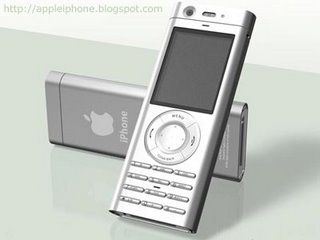
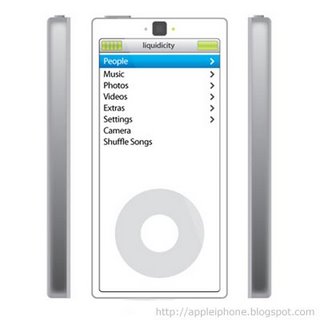
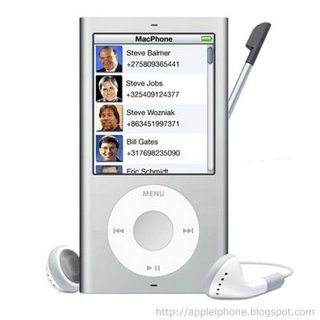
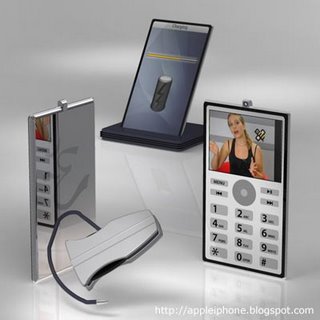
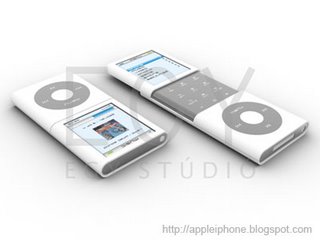
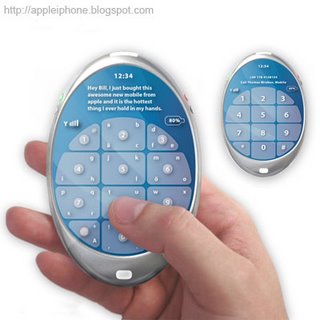
Iphone review

a few image review about Iphone on blog Apple Phone verry cool


Tuesday, January 23, 2007

Sony Ericsson W550i Walkman Camera Phone

You know that when Sony Ericsson decided to license the 'Walkman' name from Sony Corporation for a brand new and undisclosed mobile, something good was about to surface. That something was subsequently unveiled in the form of the W800i, Sony Ericsson's first camera phone that was purposefully designed as a lifestyle gadget with telecommunication capability. The W800i was put together in light of the popularization of MP3 players and a booming industry of online music stores. As more and more consumers take to the streets with hundreds, if not thousands of digital tracks in audio gadgets of different shapes and sizes, it became apparent that the lifestyle of modern day city dwellers is veering fast towards that of digital entertainment, even when they are on the go. Knowing the inconvenience brought about by an increase in gadget count for these users, the arrival of the W800i was very timely to say the least. Although it was not the first camera phone to boast of MP3 playback functionality, it was however the first camera phone to leverage on the Sony 'Walkman' branding and along with it, the first 'Walkman' camera phone featuring a dedicated MP3 media interface, controls and impressive audio quality; for a phone.


Two months on and the latest Sony Ericsson handset to be given a 'Walkman' makeover is the new W550i. There are many similarities between the two models, chief among which is the user-friendly MP3 playback interface, the signature orange theme, and a couple of carefully placed 'Walkman' logos to give it its distinct digital audio playback persona. As for form factor however, the W550i comes in a different twist, literally. Based on the now defunct S600i that drew its own principle design from Sony Ericsson's first swiveling handset, the S700i, there are two modes of operation available to the W550i. Before we delve further into the handset though, let us brief you on the technicalities of the new W550i 'Walkman' camera


Sony Ericsson W550i Technical Specifications
Network frequency Triple Band GSM 900 / GSM 1800 / GSM 1900

Antenna Integrated

Display 262K colors TFT
176 x 220 pixels

Storage 256MB Onboard Shared

Address book Stores up to 1,000 contacts
Supports Photo ID

Messaging SMS
EMS
MMS
Email
Instant Messaging

Imaging 1.3 megapixels CMOS Camera
LED Flash Strobe
Video Recording

Alerts 40-channel Polyphonic Ringer
Vibrator
MP3 Ringtones Supported

Radio FM Radio

Hands free talking Yes

Java Support Yes

Mobile Internet Access WAP 2.0

High Speed Data Transfer Class 10 GPRS

Data Exchange Bluetooth
Infrared
USB Data Cable

Software Alarm
Calendar
Notes
Tasks
Calculator
Picture Editor
Image Viewer
Flash Light
Stop Watch
Voice Memo
Video Player
World Clock

Games 3D Worms Forts: Under Siege 3D
3D Extreme Air Snowboarding
Midway?s Gauntlet

Battery Rating (Standard Battery) Stand-by Time: Up to 375hrs
Talktime: Up to 8hrs

Weight 120g

Dimensions 93 x 46.5 x 22.5 mm (L x W x H)

HP iPAQ hw6900 Review


If you are searching for a way to stay in touch while on the road, there are not too many options better than the HP iPAQ hw6900. Even though its predecessor, the 6500 series, had some drawbacks, it appears that the new models are better than ever before. They are geared towards business oriented people that need to stay in touch even when they are not fully available from their office. The HP iPAQ hw6900 takes care of these communication issues in more ways than one.

Just like the 6500 series before it, we first noticed that they HP iPAQ hw6900 is a bit on the big side. This is not to say that it is too bulky to carry around, but it does have a bit of awkwardness to it at times. The dimensions of this unit are 4.65 x 2.8 x .71 inches. In addition, it weighs in at approximately 6.3 ounces.

A great feature that plays into the hands of businessmen is the battery life. The 1200 mAHh Lithium Ion has a life of four hours worth of talk time, or seven days of standby. During our review, the battery lasted just around three days; this was with moderate use from all of the features. In most cases this should be plenty long enough for any businessman before they have to charge it for the first time.

As far as communication is concerned the HP iPAQ hw6900 is tops. In addition to its standard cell phone features, it also allows communication in many other ways as well. One of the most notable is the 802.11b Wi-Fi radio. This is a feature that is not included in many units, and really puts the HP iPAQ hw6900 head and shoulders above the competition in this area.

You can also get Bluetooth 1.2 on your HP iPAQ hw6900 which makes transferring files a breeze. And when a Wi-Fi hotspot is not around you also have the ability to use the phone as a modem pc. We found this versatility to be handy in more than one occasion.

Another big improvement over past years is the usability of the keyboard. In the past there have been concerns with the round keys that made them difficult to push; this was especially true for those of us with larger fingers. But after hours of testing, HP decided to go with flat keys on the newest model. This will make it much easier to communicate quickly while typing short messages.

The camera on the HP iPAQ hw6900 is nothing special, but with 1.3 megapixels it gets the job done. To go along with the camera there are also audio and video features that you can surely find a use for. The main issue with the camera was the two second delay after pressing the button to take a photo. In many cases this was just enough time for our subject to move and distort the picture.

And finally, the GPS feature on the HP iPAQ hw6900 can be very helpful. With GPS, we never found ourselves lost while navigating a new city. The only downfall of this feature is that it eats up battery life at a quick pace. While using GPS you can expect about three hours.
Overall, when it comes to the HP iPAQ hw6900 you are getting a versatile package that will allow you to communicate with the world no matter where you are.

Monday, January 22, 2007

A (Sheet) Music Reader

FreeHand Music ofers a 12.1" backlit LCD dedicated sheet music reader called the MusicPad Pro that retails for $1,199. Weighing about 4 lbs and with a resolution of 1024 x 768, the MusicPad Pro also has a jack that connects a foot pedal for turning the pages. They also have an online store that offers almost 90,000 digital music scores. It looks a lot like a large sized Sony or iLaid reader (but without the e-ink screen.)

Friday, January 19, 2007

FPT 2010[just for fun to con...]

After the successful establishment of the first University, FPT corporation launched its second private university in Vietnam, FPT University of Computer Knowledges (F.U.C.K). F.U.C.K students (a.k.a F.U.C.Kers) will be provided with the lastest IT falcilities, including the wireless broadband service from a unit of FPT Telecom, WiMax for Home and Office Remote Extension (W.H.O.R.E). W.H.O.R.E is responsible for ensuring that F.U.C.Kers are always in ready condition to study new technologies and techniques.

FPT's biggest company, FPT Integration Service, has changed its focus to High-techs solutions only, and changed its name to FPT Integration Service of High-technology (F.I.S.H). F.I.S.H has researched and developed its own network deployment methodology, System Hard Integration Techniques (S.H.I.T). During 2010, more than 300 companies in Vietnam have used S.H.I.T to build their information systems. Many companies even modified and improved S.H.I.T to adapt with their own scenarios. The most notable case is Baoviet with Baoviet Unified Legacy Logics S.H.I.T (B.U.L.L.S.H.I.T). B.U.L.L.S.H.I.T was rewarded "S.H.I.T of the year" by F.I.S.H.

FPT Distribution Channels also made remarkable improvement in 2010 with 2 new programmes: Distribution and Introduction Channel Knowledgebase (D.I.C.K) and Product User Satisfaction SurveY (P.U.S.S.Y). While D.I.C.K aims at providing potential customers a comprehensive database of FDC's services, products, distribution network and showrooms, P.U.S.S.Y collects customers feedbacks to measure the efficiency and profitability of each channel. D.I.C.K and P.U.S.S.Y are 2 undetachable parts and contribute a lot to FDC's successes. Both of them are products of F.U.C.Kers but P.U.S.S.Y utilizes W.H.O.R.E’s infrastructure to simplify the data gathering process.

FPT Mobile has cooperated with Hutchison to distribute the latest 3rd generation mobile phones and to bring into operation a 3G network. FPT Mobile has converted a lot of users from other mobile phone networks to its 3G service. 2009,2010 and 2011 are the 3-G Aggregation YearS (3-GAYS) for FPT Mobile.

FPT Software Solution, the least known company, has made incredible achievements with a security system to protect software users from possible attacks, namely Application Security System for Home, Orgranisations and Large Enterprises (A.S.S.H.O.L.E). A.S.S.H.O.L.E is adopted quickly by domestic companies just as S.H.I.T was and brough millions of dollars of revenue for FSS.

Finally, while other FPT companies focus on technology advancement and customer satisfaction, FPT Software's strategy is to increase profit by reducing human factor overhead in software processes. The most important activity was development of a technology that can automatically audit and patch software products. The system is called Software Upgrade and Correction Kits (S.U.C.K) and is still in beta. At the moment, it is being evaluated by selected users (S.U.C.Kers). Most of current S.U.C.Kers are F.U.C.Kers


Do you want to a F.U.C.Kers ??

Skype to launch domestic calling plans (continu...)

Skype calls are dialed over a high-speed Internet connection using either a personal computer, a cordless handset configured to communicate directly over a broadband modem, or certain cell phones with Wi-Fi capability. Each user can call other Skype users for free.

The new options were being launched a month after Skype, a subsidiary of eBay Inc., introduced a North American service offering unlimited calls within the United States and Canada with no connection or per-minute fees for about $30 per year — or less than half as much as Skype Pro appears likely to cost.

The company took a different approach in North America largely due to technical issues that prevented storage of credit card information for monthly recurring charges, Oberg said. The Skype Pro approach is preferable, he said, because consumers are more familiar with paying monthly fees for telephone service and connection charges are common in many nations.

The Skype Pro plans also will include free voice mail, a service for which Skype charges 15 euros ($19.40) per year. Subscribers also will be offered an as-yet-undetermined discount on a "SkypeIn" number that can be given out to receive calls from regular and wireless phones. That service currently costs 30 euros ($38.80) per year.

In tandem with the launch, Skype said it is also reducing its per-minute international rates up to 65 percent, to 1.7 euro cents (2.2 U.S. cents), for calls to the Czech Republic, Hungary, Israel, Luxembourg, and Malaysia, as well as Guam, Puerto Rico, Alaska and Hawaii in the United States.

The countries where Skype Pro is being offered are Australia, Austria, Belgium, Brazil, Denmark, Finland, France, Germany, Greece, Ireland, Italy, Japan, Luxembourg, the Netherlands, Norway, Poland, Portugal, Slovenia, Spain, South Korea, Sweden, Switzerland, Taiwan and the United Kingdom. It will also be offered in Hong Kong.

Skype to launch domestic calling plans

NEW YORK - The Internet phone service Skype is introducing new domestic calling plans for 24 countries, plus Hong Kong, where users will pay a monthly subscription and a connection fee but no per-minute charges.

The monthly fees for the new Skype Pro plans have not yet been finalized, but they were expected to be set at less than 5 euros, or about $6.50, an executive told The Associated Press on Wednesday.

The per-call connection fee for Skype Pro calls within a given country to a regular phone or mobile device within that same country will be 3.9 euro cents, or roughly 5 U.S. cents, said Stefan Oberg, general manager for Skype Telecoms.

Special High Intensity Training [just for fun]

In order to assure the highest levels of quality work and productivity from employees, it will be our policy to keep all employees well trained, through our program of Special High Intensity Training (S.H.I.T.).

We are trying to give our employees more S.H.I.T. than anyone else. If you feel that you do not receive your share of S.H.I.T. on the job, please see your manager. You will be immediately placed at the top of the S.H.I.T. list, and our managers are especially skilled at seeing that you get all the S.H.I.T. you can handle.

Employees who do not take their S.H.I.T. will be placed in Departmental Employee Evaluation Programs (D.E.E.P. S.H.I.T.). Those who fail to take D.E.E.P. S.H.I.T. seriously will have to go to Employee Attitude Training (E.A
Viet Thang Pham: Employees who do not take their S.H.I.T. will be placed in Departmental Employee Evaluation Programs (D.E.E.P. S.H.I.T.). Those who fail to take D.E.E.P. S.H.I.T. seriously will have to go to Employee Attitude Training (E.A.T. S.H.I.T.).

Since your managers took S.H.I.T. before they were promoted, they do not have to do S.H.I.T. anymore, because they are full of S.H.I.T. allready.

If you are full of S.H.I.T., you may be interested in a job, training others. We can add your name to our Basic Understanding Lecture List (B.U.L.L. S.H.I.T.). Those who are full of B.U.L.L. S.H.I.T. will get S.H.I.T. jobs, and can apply for promotion to Director of Intensity Programming (D.I.P. S.H.I.T.).

If you have any questions, please direct them to our Head Of Training Special High Intensity Training (H.O.T. S.H.I.T.)
:D

Download Error Nuke now absolutely free

Let Error Nuker, your amazing FREE PC Diagnostics tool, identify the precise problems in your Windows registry so you can determine exactly what your PC is suffering from.
Even if your PC is perfectly fine, you should try the diagnostics tool if you want to avoid serious problems before they happen.
Best of all you can keep the tool and find out if your PC has problems for FREE as often as you like.

Why Does it Happen To My PC?
If you are experiencing problems with your PC, or it's no longer performing as it used to, the likelihood is your Windows registry is overloaded with redundant entries created by the Windows operating system or other software.
Windows communicates with its registry dozens of times every second and broken registry keys can make that communication difficult and slow.
Even moderate use of a PC running Windows could result in numerous registry keys and files spread across the Windows registry. Many of these entries are no longer needed or used by Windows and may well disrupt the smooth running of your system.
After just a few days these Windows registry keys and files can begin to accumulate and, over time, will cause your PC to slow down, trigger 'missing' .exe or .dll files messages and finally stop running altogether. If you've had your system for some time then you'll be astonished at the number of unnecessary Windows registry keys and files hanging around, just waiting to strike. Deleted programs often leave a few Windows registry keys and files littered around and these are potential problems in the making.
If you'd like to know just how many redundant Windows registry keys and files are lurking in your PC just download and run Error Nuker - it will scan your Windows registry and give you the report for FREE.

Can I avoid this happening to my PC?
Like most PC users who try our diagnostic check for the first time, it's likely you will find dozens (possibly hundreds) of 'time bomb' Windows registry keys and files, just waiting to create havoc with your system - usually at the most inconvenient moment! Once you see the extent of the problem you'll undoubtedly want to rid these 'time bombs' from your PC as fast as possible. Now here's the good news - Error Nuker will fix them for you, quickly and efficiently with just one powerful mouse click using our Windows Registry Repair Algorithm (WRRA).

How frequently should I run Error Nuker?
To keep your PC in tip-top condition we recommend running our diagnostic check at least once every week. If you decide not to fix the problems right now, hold on to Error Nuker, it's yours to keep and our way of thanking you for evaluating our Windows Registry Repair Algorithm (WRRA).

Wednesday, January 17, 2007

Small drives cross performance threshold

Seagate announced a new, faster class of 2.5-inch hard drives on Tuesday, an important part of the effort to get the smaller devices to replace the 3.5-inch drives that currently prevail in much of the server market.

Seagate's new Savvio 15K spins at 15,000 revolutions per minute, which means data can be found and retrieved faster than with preceding 10,000rpm 2.5-inch models.


That's important in particular for servers, which often run multiple jobs simultaneously and therefore need to access data scattered across the drive. And computing jobs often are constrained by the time it takes for a hard drive to start sending requested data as well as the speed with which it can send it.

The feature is arriving later than expected, though. Hewlett-Packard had hoped for 15K 2.5-inch drives by the end of 2005; the company is a major proponent of the smaller drives for its ProLiant line of x86 servers.

The 15K drives take up less room, which is important for small systems such as blade or rack-mounted servers, but Seagate also said the drives consume 30 percent less power than current 3.5-inch 15K drives.

The Savvio 15K drives are Serial Attached SCSI (SAS) models geared for servers.

YouTube rivals look for answers


For months, analysts have predicted a shakeout in the much-hyped video-sharing sector, a business made famous by YouTube.

It increasingly looks like they were right.

Revver, a Los Angeles video-sharing company noted for being among the first to share advertising revenue with videographers, announced last month that two of the company's three co-founders and an undisclosed number of "support staff" were no longer with the company. Among those who left were Rob Maigret, Revver's chief technology officer, and David Tenzer, the head of media partnerships.


Industry insiders say Revver and other smaller video-sharing sites are in turmoil because of the sheer domination of their nascent market by YouTube. Named recently by Time magazine as "Invention of the Year," YouTube, which was acquired by Google last year, has so taken control of the video-sharing market that many rivals now are switching business models to avoid going head-to-head with the YouTube juggernaut, shaking up their executive ranks, or selling out.

"I think we can all acknowledge that YouTube has won the big prize," Thomas McInerney, the former CEO of Guba, said in an interview with CNET News.com two weeks ago.


Headquartered in San Bruno, Calif., YouTube's traffic grew from a few thousand to 30 million visitors in a year. The company's success is based largely on having a video player that didn't require any software downloads and by providing users with an easy way to upload clips. Another important factor was the decision by YouTube executives not to prescreen videos before they were posted--a controversial policy that allowed people to share snippets from popular TV shows, music videos and movies without the copyright holder's permission.

Said Revver co-founder Oliver Luckett in an interview Thursday: "YouTube has won round one. It has absorbed everything."

A Revver spokeswoman said Maigret and Tenzer have "transitioned to consulting positions." But Tenzer's departure was particularly startling to some observers. He was wooed away from the Creative Artists Agency, one of Hollywood's most powerful talent agencies, only seven months ago. In his nearly 25 years at CAA, Tenzer earned a reputation for packaging major entertainment deals and was brought to Revver to help the start-up form partnerships with Hollywood studios.


Tenzer declined to be interviewed. Maigret has left to collaborate with Luckett, who left Revver for a video project. Luckett said Revver, founded in 2004, is healthy and that he believes the company will succeed. He declined to give specifics on why he walked away.

"Let's just say I see a different opportunity," he said last week.

Sources close to Revver say it will now focus on improving the core businesses: video sharing and ad distribution, and is less concerned with big studio deals.

San Francisco-based Guba saw three executives leave the company last month, including CEO McInerney. Guba has recently hired banker Blake Warner of Thomas Weisel Partners to help find a buyer, according to a report in the blog GigaOm.

Operations at both Guba and Revver continue unimpeded by the upheaval, say sources within the companies. But the competitive landscape, which features more than 200 start-ups with few that have reported a profit, is sure to see more shakeups in the coming year, said Josh Martin, an analyst at Yankee Group Research.

"I'd be very surprised if some of these companies don't go out of business this year," Martin said. "Too many of (them) are distributing the same kind of content."

Throughout YouTube's meteoric rise, none of its competitors has mounted a serious challenge. A check of Alexa.com, an Internet tracking system, shows that YouTube is now one of the Internet's top 10 most trafficked sites on the Web, while none of the company's top competitors has cracked the top 100.

According to Hitwise, another traffic-measuring company, YouTube was the No.1 most visited video-sharing site in December, with 45.9 percent of all visits by U.S. Web users. Revver was 27th with 0.08 percent of visits, and Guba came in 32nd with 0.05 percent.

Google paid $1.65 billion in October to acquire YouTube, and some thought that would fire interest in at least some of the video-sharing site's competitors. Yet the market hasn't seen another blockbuster deal since. McInerney offered a bleak assessment of the situation when he said the "billion-dollar opportunity" has come and gone.
YouTube may be the only video-sharing player to have earned a profit, said two executives who have seen the company's financial books. YouTube, the sources said, recorded a relatively narrow profit in at least one of its recent quarters.

"We're all still experimenting with how we're going to make money," said Veoh Networks CEO Dmitry Shapiro. "We know we can make money through advertising. We don't know whether we can do that by serving an ad with every video or every other video or whether the ads will be served before a user watches the video or after...The only thing we know for sure is that we will make money."

Others have responded to YouTube's success in recent weeks by overhauling Web sites or revamping business models.

Veoh, whose investors include Time Warner and former Disney Chairman Michael Eisner, recently announced that it has begun helping videographers charge for videos. The company also said it can post a video to any of the top video-sharing sites, including YouTube, saving a consumer time and effort.

YouTube's competitors may recognize the company's tight grip on the sector, but say they don't necessarily think the company can hold it for long. Luckett, for example, predicted that YouTube's legal troubles with copyright violations, when people post unauthorized video clips to the site, are likely to plague Google.

A YouTube representative declined to comment for this story.

So if video-sharing companies are no longer following in YouTube's footsteps, in which direction do they plan to go?

Luckett and Maigret plan to continue working in online video but aren't ready to discuss details. They do say they learned one crucial lesson from YouTube: The public wants professionally crafted video made available on the Internet. Clips from TV shows such as NBC's "Saturday Night Live" and other copyright material are to a certain extent responsible for YouTube's popularity, Luckett asserts. Eventually the TV and movie producers will want greater control. Helping them do this is what Luckett says he plans to do in the future.

"Among the public, there will be a flight to quality," Luckett said. "The amateur-made stuff found on these (user-generated) sites is the same content found on 'America's Funniest Home Videos.' It was one of the most syndicated shows of all time. It's a fabulously funny show, but it's not an industry. Hollywood studios own the content people want. They should be dictating the business models."

(news.com)

Wednesday, January 10, 2007

Cisco Systems said Thursday it will pay $830 million in cash and stock for e-mail security company IronPort Systems.

IronPort, a privately held company based in San Bruno, Calif., is a leader in security technology that scans e-mail messages for spam and viruses. Its products are sold to large companies, including Cisco, which says it has used the IronPort product for three years. IronPort competes against security heavyweights such as McAfee and Secure Computing.
One of the IronPort's most important innovations is software that rates Web links in e-mail to better filter out junk messages, including those with links to malicious sites.
The company developed the technology in response to new tactics used by spammers. Specifically, spammers have been inserting links into e-mails instead embedding the spam message in the e-mail. As a result, traditional spam filters that scan the content of e-mail messages can't filter the unwanted messages.

Cisco is the world's leader in networking equipment that shuttles Internet Protocol communications traffic around a corporate environment. Through several acquisitions, the company has also built a strong security portfolio. The IronPort acquisition is significant for Cisco mainly because it expands Cisco's security expertise beyond the network and allows it to offer products that also filter actual communications. This is especially important as new security threats emerge from a growing volume of spam.
"This was a very strategic purchase for us," said Richard Palmer, senior vice president of the Cisco Security Technology Group. "If you think of the vision of the self-defending network, it's important to protect whatever is coming in and out of the network. And that is what IronPort does."
IronPort's 400 employees will be added to Cisco's security division, which today has about 900 people. The deal is expected to close within the next three months.
Hi my name Tuan, wellcome to my blog

Star Teen